China’s industrial cleaning technology is moving from manual routines toward connected, measurable operations. The key question is not simply which machine cleans fastest. It is what are trends in industrial cleaning technology, and which improvements deliver reliable results on a real factory floor? In China, priorities include labor efficiency, water use, worker safety, and consistent cleaning across large production sites.
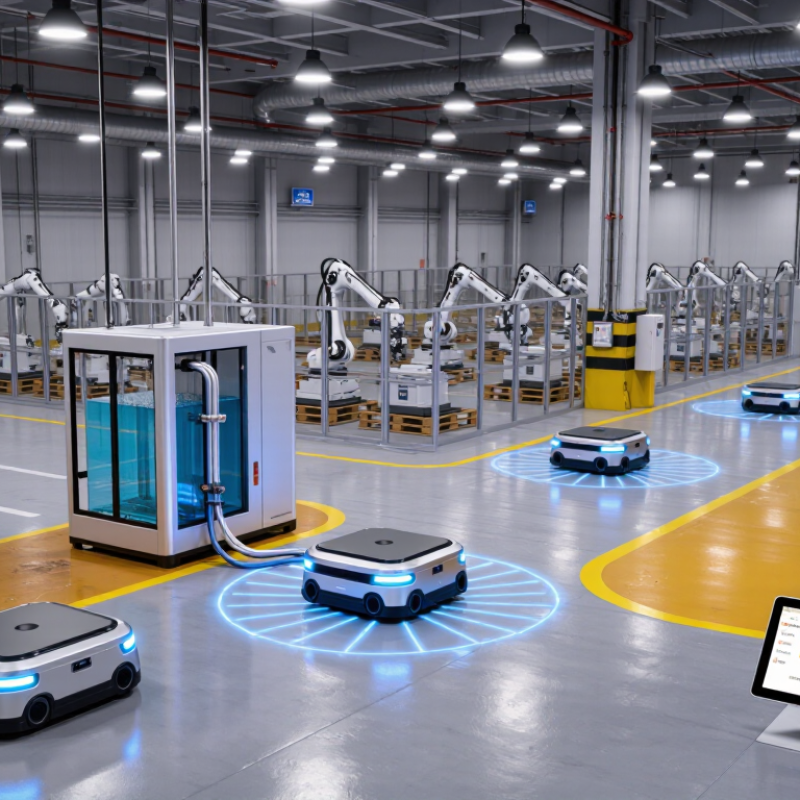
The International Federation of Robotics’ World Robotics 2024 report recorded 276,288 industrial robot installations in China in 2023, about 51% of global installations. The report covers industrial robots broadly, not cleaning equipment specifically. Still, it shows the scale of automation adoption that can support robotic scrubbers, autonomous floor-cleaning machines, and sensor-guided systems. A machine navigating around pallets and wet-floor zones is more useful than one that performs well only in a demonstration.
Other developments include connected equipment that tracks cleaning cycles, water-recycling systems, and more precise chemical dosing. These tools can help facility managers monitor use and identify missed areas. But results depend on floor conditions, maintenance, and staff training. Technology is not a shortcut.
The evidence also has limits. Public reports rarely compare cleaning performance across Chinese factories using consistent measures. Buyers should therefore check practical details: cleaning coverage, downtime, water consumption, and service availability. Impressive specifications matter less than dependable performance on a busy production shift.
In China, industrial cleaning technology covers the equipment, processes, and controls used to remove contaminants from industrial assets. Its scope includes cleaning production lines, machine parts, tanks, floors, and ventilation components. Methods may involve water, heat, mechanical action, or formulated cleaning agents, depending on the material and type of residue. The goal is not simply to make surfaces look clean.
The term also includes practical steps around the cleaning itself: choosing a process, managing rinse water, checking results, and maintaining equipment. For example, a workshop may use a parts washer for oily components, while a food-processing site may need procedures designed for frequent surface cleaning. These are different operating needs. The boundary is not always neat.
A useful definition should distinguish industrial cleaning from general housekeeping and from specialized tasks such as surface preparation. It should also account for worker exposure, material compatibility, energy use, and the destination of collected waste. These factors shape whether a method suits a particular facility. A clean-looking surface can still carry residue, so visual inspection alone may be insufficient. In practice, definitions should leave room for site-specific testing; one standard checklist rarely fits every line.
In Chinese factories, cleaning usually begins with water-based spray or immersion. Heated water and alkaline detergents loosen oil, dust, and metal fines from parts. Operators adjust temperature, concentration, and rinse time to suit the material. Too much heat can damage coatings; too little leaves residue. Simple, but not foolproof.
Ultrasonic cleaning helps reach narrow channels and blind holes. Tiny bubbles collapse against surfaces, dislodging particles that brushes may miss. For heavy scale, mechanical brushing or controlled high-pressure water can work better. Dry-ice blasting avoids rinse water, but it needs good ventilation and careful handling. The right choice depends on the soil, part geometry, and drying requirements. No single method fits every line.
Water use matters. China’s Ministry of Water Resources reported 97.1 billion cubic metres of industrial water use in its 2023 China Water Resources Bulletin. That figure makes rinse-water recovery worth evaluating, especially in high-throughput plants. Energy also deserves attention: the International Energy Agency’s Energy Efficiency 2023 report puts industry at about 37% of global final energy use in 2022. Cleaning is only one part of that demand, but heated baths and drying systems can add up. In practice, teams sometimes overfocus on removing visible grime. Residue testing and wastewater checks may reveal a different story.
Across China’s factories, warehouses, and food-processing sites, cleaning is moving from fixed schedules toward data-guided routines. IFR’s World Robotics 2024 report recorded 205,000 professional service robots sold worldwide in 2023, up 30% year over year. This figure covers many service tasks, not cleaning alone, but it signals growing interest in automation.
Smart cleaning now combines autonomous scrubbers with sensors, digital floor maps, and maintenance alerts. McKinsey’s 2024 State of AI report found that 72% of surveyed organizations used AI in at least one business function. That result is not specific to cleaning, yet it reflects wider adoption of data-driven operations. On a factory floor, route data can reveal repeated spills, missed corners, or wasted water. Supervisors can then adjust cleaning schedules around production shifts.
Still, sensors miss things. A machine may record a completed route while leaving residue beneath a conveyor or along a wet loading-bay edge. Mixed layouts and changing obstacles can also disrupt navigation. Human checks remain useful, especially during rollout, when teams need to compare dashboard readings with actual floor conditions. Automation works best when cleaning data informs workers rather than replacing their judgment.
Industrial cleaning technology must match the soil, surface, and production line. In food plants, automated spray systems can remove residues from tanks and conveyor belts. Metalworking shops may use aqueous parts washers to lift oil from machined components. Electronics cleaning often needs tighter control: excess moisture or residue can damage small assemblies. Yet automation is not automatically greener. A high-pressure system may save chemicals but increase energy use or spread contaminants if filtration is poor.
Environmental performance deserves measurement. FAO AQUASTAT data estimate that industry accounts for about 19% of global freshwater withdrawals. That figure covers industry broadly, not cleaning alone, but it shows why rinse-water recovery matters. Closed-loop systems and targeted spray nozzles can reduce water demand. They also need monitoring; reused water may carry oils or particles back onto parts. A practical assessment should track water and energy per cleaning cycle, plus wastewater quality. Small tests help.
Tips: Record liters and kilowatt-hours per batch before changing equipment. Compare cleaning results on representative parts, not just one easy sample. Check filters and rinse tanks routinely. Reuse water only when process quality allows. A missed contaminant can mean rework, so the “greenest” cycle is not always the one with the lowest water reading.
Worldwide annual installations of industrial robots, 2020–2023
Industrial robots can support automated cleaning tasks such as repeatable surface treatment and parts handling. The figures show installations across all industries—not cleaning-specific robots—and do not measure cleaning performance or environmental impact. Automation may help control resource use, but results depend on the process, equipment, and operating conditions. Source: International Federation of Robotics, World Robotics 2024.
Evaluating industrial cleaning solutions in China starts with the process, not the machine. What soil must be removed, from which surface, and to what verified standard? A stamping line with oily metal parts needs different chemistry and rinsing control than a food-processing floor. The China Water Resources Bulletin 2023 reports industrial water use of about 97.1 billion cubic metres. That makes water consumption and reuse practical evaluation criteria, not optional extras. Ask suppliers for water use per cleaning cycle, energy per batch, and measured residue levels. Test these figures on your own production line.
Check material compatibility, worker exposure controls, wastewater handling, and maintenance access. A system that cleans quickly but damages seals or leaves residue can create costly downtime. The IEA’s Energy Efficiency 2023 report estimates that industry accounts for roughly 37% of global final energy use, reinforcing the value of measuring energy per unit cleaned. Require a controlled trial with repeatable soil loads and recorded cycle times. Keep the test conditions visible. Compare total operating costs, including water, chemicals, labour, and disposal, rather than purchase price alone. Some results will be imperfect: factory conditions vary, and supplier test data may not match a busy shift. Record that gap, then retest under real production conditions.
| Evaluation Dimension | Technology Trend | What to Evaluate | Evidence to Request | China-Specific Considerations |
|---|---|---|---|---|
| Cleaning performance | Application-specific systems combining mechanical action, chemistry, temperature, and time | Removal of the actual soils involved, such as oils, particulates, scale, or process residues; repeatability; and compatibility with the required cleanliness level | Controlled trials using representative parts and soils; inspection results; documented process parameters; and acceptance criteria agreed before testing | Test under production-relevant conditions and confirm that the result meets the end user’s process and quality requirements. |
| Water and resource efficiency | Lower-water processes, rinse-water reuse, filtration, and closed-loop or recirculating systems where suitable | Freshwater use, wastewater volume, energy use, chemical consumption, and the quality limits needed for reuse | Measured consumption per production cycle or cleaned unit; water balance; and operating records from a representative trial | Check local water availability, discharge requirements, and whether reuse could affect product quality or downstream processes. |
| Chemical and emissions management | Lower-hazard or lower-volatility formulations and process controls that reduce unnecessary chemical use | Safety data, worker exposure controls, volatile emissions where relevant, storage needs, and compatibility with the material being cleaned | Current safety data sheets, chemical inventory, risk assessment, ventilation design, and emissions test results where applicable | Assess applicable national and local requirements. Air-emission obligations may include GB 16297-1996 and relevant local standards or permits. |
| Wastewater and residue handling | Integrated cleaning and wastewater treatment, including separation, filtration, and treatment matched to the waste stream | Wastewater characteristics, treatment effectiveness, sludge or spent-media generation, and safe handling routes | Wastewater analysis, treatment-flow diagram, operating and maintenance plan, and records of compliant disposal or discharge | Check the applicable discharge permit and local requirements. GB 8978-1996 may be relevant, subject to its scope and any stricter applicable local limits. |
| Automation and process control | Automated wash systems, programmable recipes, sensors, and production-line integration | Process consistency, traceability, changeover time, operator workload, fault detection, and integration with existing equipment | Cycle records, control-system functions, alarm and maintenance logs, and a site trial covering normal operating variations | Confirm that controls, documentation, training, and maintenance support are practical for the facility’s operating model. |
| Advanced and non-contact methods | Selective use of ultrasonic, dry-ice, laser, or other specialized cleaning methods for suitable applications | Substrate compatibility, access to complex geometries, particle or residue removal, surface effects, throughput, and safety controls | Material-compatibility tests, before-and-after inspection, safety assessment, and a comparison with the existing cleaning process | These methods are application-dependent; verify suitability on production parts rather than assuming they can replace wet cleaning universally. |
| Worker health and safety | Enclosed equipment, safer chemical handling, ventilation, guarding, and reduced manual contact | Exposure routes, noise, heat, moving parts, emergency controls, and the need for personal protective equipment | Workplace risk assessment, equipment safeguards, ventilation checks, training records, and exposure monitoring where required | Review applicable occupational-health requirements, including GBZ 2.1-2019 for occupational exposure limits to chemical hazardous agents. |
| Total cost and reliability | Lifecycle evaluation rather than selection by purchase price alone | Equipment and installation costs, utilities, chemicals, labor, maintenance, consumables, downtime, and waste treatment | Transparent cost assumptions, maintenance schedule, spare-parts plan, uptime records, and a trial-based operating-cost estimate | Compare solutions using the same production volume, operating hours, utility prices, and waste-management assumptions. |
| Compliance and documentation | Documented processes with records that support audits, permits, and internal quality systems | Applicable environmental, safety, product-quality, and site-specific requirements; document control; and change management | Permits or compliance records where applicable, operating procedures, inspection records, and a list of relevant standards | Confirm applicability with the local authority, qualified compliance personnel, and the facility’s permit conditions; standards do not replace site-specific requirements. |
Evaluation note: The best solution depends on the soil, substrate, cleanliness requirement, production rate, and site permits. Verify performance and compliance through representative trials and site-specific review.
It covers equipment, processes, and controls for removing contaminants from production lines, machine parts, tanks, floors, and ventilation components. It also includes rinse-water management and result checks.
Industrial cleaning considers residue, worker exposure, material compatibility, energy use, and collected waste. A surface can look clean and still carry residue. Visual checks alone may not be enough.
Water-based spraying or immersion is common. Heated water and alkaline detergents can loosen oil, dust, and metal fines. Temperature, concentration, and rinse time need adjustment.
It can reach narrow channels and blind holes. Tiny bubbles help dislodge particles that brushes may miss. It is not a cure-all.
Consider the residue, part shape, material, and drying needs. Mechanical brushing or controlled high-pressure water may suit heavy scale. Dry-ice blasting avoids rinse water but requires ventilation and careful handling.
Excessive heat can damage coatings, while insufficient heat may leave residue. A longer rinse is not automatically better. Testing helps.
Industrial water use in China reached 97.1 billion cubic metres in 2023. High-throughput plants may benefit from evaluating recovery. The best approach depends on site conditions.
Heated baths and drying systems add to energy demand. Industry used about 37% of global final energy in 2022, though cleaning is only one part. I may be underestimating local differences.
This article explores the scope of industrial cleaning technology in China, clarifying the methods and equipment used to remove contaminants from production facilities, machinery, and workspaces. It reviews established approaches, including manual cleaning, mechanical systems, water-based processes, and specialized treatments, while considering how different industries choose techniques according to the type of soil, surface, and production environment.
It also examines what are trends in industrial cleaning technology, with attention to automation, sensor-based monitoring, and smarter systems that can improve consistency and reduce unnecessary use of water, energy, and cleaning materials. Applications across industrial settings are considered alongside environmental priorities such as waste management and resource efficiency. The article concludes with practical criteria for evaluating cleaning solutions in China, including performance, worker safety, operating costs, maintenance needs, adaptability, and environmental impact.

Dulles Equipment