How to Select Cleaning Equipment for Different Industries in 2026?

Time:2026-09-25 Author:Sienna
0%

In 2026, choosing cleaning equipment is less about buying the largest machine and more about matching it to the work. A compact scrubber may suit a busy supermarket aisle, while a food-processing floor may need equipment that handles frequent washdowns and leaves minimal standing water. Healthcare settings bring different priorities, including controlled dust, quieter operation, and reliable cleaning around beds and equipment. Details matter.

Environmental-hygiene expert Michael A. Berry’s work emphasizes cleaning for health, not appearance alone. A practical paraphrase of that principle is: choose equipment for the hygiene outcome it can consistently deliver. That means checking more than brush width or motor power. Consider floor type, soil load, cleaning frequency, operator training, maintenance access, and where dirty water goes. In a warehouse, battery runtime and turning radius can decide whether a machine finishes its route. In a hotel, noise and maneuverability may matter more. Small differences count.

This guide explains how to select cleaning equipment for different industries by connecting real operating conditions with equipment features. It also considers total ownership costs, including consumables, repairs, and staff time—not just the purchase price. A glossy specification sheet can be persuasive. It can also miss the point. No selection checklist replaces a site trial, and even a well-matched machine can disappoint when training or maintenance is neglected. That part is easy to underestimate.
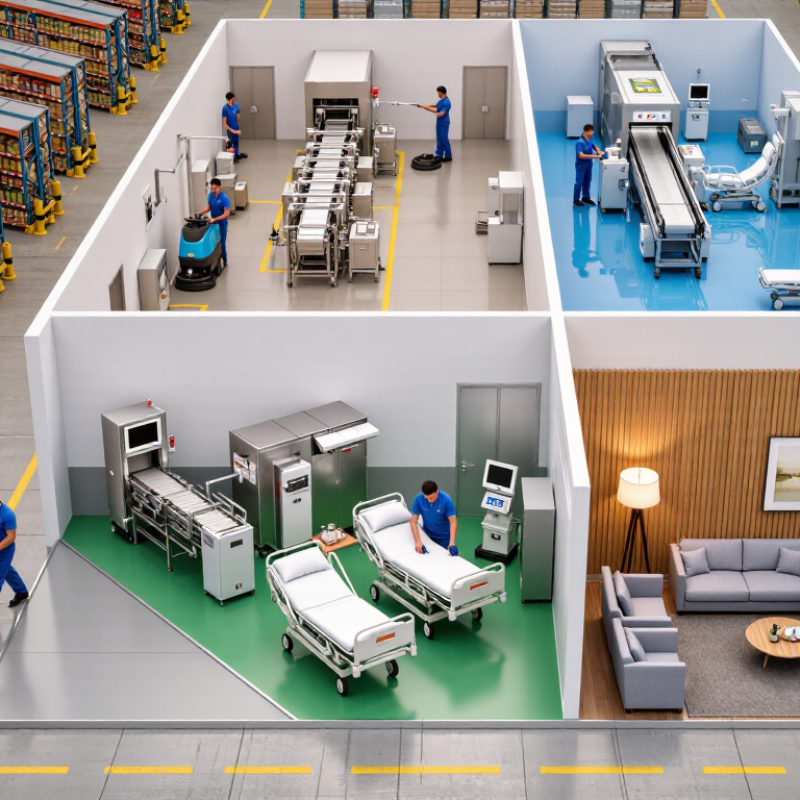
How to Select Cleaning Equipment for Different Industries in 2026?

Identify Industry-Specific Cleaning Requirements

Healthcare cleaning requires equipment that supports controlled, repeatable disinfection. The CDC estimates that about 1 in 31 U.S. hospital patients has a healthcare-associated infection on any given day (CDC, 2015). That figure makes surface access and cleaning routines important selection criteria. Consider quiet vacuums with effective fine-particle filtration, easy-to-disinfect handles, and floor machines compatible with facility-approved chemicals. Food-processing spaces have different demands: the FDA Food Code 2022 calls for food-contact surfaces to be cleaned and sanitized. Choose equipment that tolerates frequent washdowns and has few crevices where residue can collect. Small details matter.

Manufacturing sites may need source-capture dust extractors, scrubbers, or sweepers suited to the material and floor layout. OSHA’s silica standard sets a permissible exposure limit of 50 micrograms per cubic meter over an eight-hour shift (OSHA, 2016). Match dust-control equipment to the hazard assessment; ordinary sweeping may spread fine dust. Hotels and schools, by contrast, often need compact machines that maneuver around furniture and operate quietly during occupied hours. There is no universal best machine. Teams can still overlook storage space, maintenance time, or operator comfort.

Tips: Walk the site before comparing specifications. Note wet zones, tight turns, floor types, and cleaning schedules. Ask staff to test controls and emptying steps. A powerful machine that is awkward to maintain may sit unused. Recheck performance after a trial; the first choice may need adjustment.

Assess Facility Conditions, Soil Types, and Cleaning Frequency

Selecting cleaning equipment in 2026 starts with the facility, not a product category. Check doorway widths, floor transitions, storage space, drainage, and access to power. A compact scrubber may suit narrow clinic corridors, while a large warehouse may need wider coverage and longer operating time. Small details matter. A ramp or crowded charging area can slow daily work.

Next, identify the soil and how often it returns. Fine dust in a production area behaves differently from oily residue near a loading bay or tracked-in grit at an entrance. Match brushes, pads, filtration, and water use to the surface and soil. Cleaning frequency matters, too. A busy food-service floor may need several passes each day, while a lightly used office may need scheduled maintenance. Consider noise, drying time, and operator fatigue; a machine that cleans well but sits unused is a poor fit.

Tips: Walk the route during a normal shift and note spills, tight turns, and high-traffic zones. Test equipment on a small floor section before committing. Track cleaning time and results for a week. The first estimate may be wrong, and that is useful to learn early.

Match Cleaning Tasks to Equipment Categories

Choosing cleaning equipment in 2026 starts with the soil, surface, and daily traffic—not the machine’s advertised capacity. In a food-processing area, sticky residue may need a wet vacuum or floor scrubber, while dry ingredients call for a suitable industrial vacuum. Check whether equipment can handle frequent washdowns and whether its filters suit the dust involved. Small details matter. A narrow aisle may rule out a large ride-on machine, even if it cleans quickly elsewhere.

Match each task to a category. A warehouse with loose grit often benefits from a powered sweeper before scrubbing; otherwise, debris can spread across the floor. Healthcare spaces may need HEPA-filtered vacuums for fine particles, plus microfiber systems for touchpoints. Offices usually need quieter vacuums and compact scrubbers that fit around desks. For hotels, carpet extractors address embedded soil, while smaller vacuums handle daily upkeep. Fit matters. In practical facility assessments, the best choice is often the machine staff can safely maneuver, empty, and maintain between shifts. That judgment can be imperfect: floor finish, moisture, and staffing patterns change, so test equipment on a small area and record cleaning time, residue, and operator feedback before expanding use.

Compare Performance, Safety, and Sustainability Features

In 2026, compare cleaning equipment under conditions that match the work, not just showroom tests. A scrubber that covers a warehouse floor quickly may struggle around hospital beds or tight restaurant kitchens. Check cleaning rate, pickup performance, noise, and runtime using representative floor types and soil levels. Small details matter. A machine that leaves damp corners can increase slip risk, even when its headline coverage rate looks impressive.

Safety features should fit the actual task. Look for stable handling, clear controls, effective guards, and filtration suited to the dust being collected. In food areas, confirm materials tolerate frequent washdowns; in healthcare, check compatibility with the cleaning products used on site. Sustainability needs the same practical scrutiny. Compare water and energy use per cleaned area, battery life, repair access, and the availability of replacement parts. A low-use setting may not need the largest battery. Yet real shifts are messy, and published figures rarely capture every interruption. Test equipment with operators, then reconsider the choice if maintenance or training proves harder than expected.

Plan Equipment Selection, Operation, and Maintenance for 2026

How to Select Cleaning Equipment for Different Industries in 2026?

Plan equipment selection around the work, not the catalogue. A food-processing floor may need a scrubber that collects water quickly, while a hotel corridor needs quiet operation and easy storage. In workshops, check debris type, floor texture, aisle width, and available power before choosing a sweeper or vacuum. Measure doorways and turning areas; a machine that cannot reach the dirty corner is the wrong machine.

Operation and maintenance belong in the same plan. OSHA reported 395 fatal falls, slips, and trips among U.S. construction workers in 2022, out of 1,069 construction fatalities. That figure does not describe cleaning work alone, but it underlines why wet-floor control and operator training matter. Set clear routes, post warning signs, and train staff to empty recovery tanks before they overflow. Schedule daily checks for cords, brushes, filters, and squeegees. Record recurring faults; a worn blade can leave a thin, easy-to-miss film. Some plans will fail in real shifts. Review them after observing actual work.

Tips: Test equipment on a small area during a normal shift. Track cleaning time, water use, noise, and repair delays for several weeks. Keep a simple maintenance log, and revise the schedule when usage changes.

How to Select Cleaning Equipment for Different Industries in 2026: Plan Equipment Selection, Operation, and Maintenance
Industry Common Cleaning Needs Suitable Equipment Types Selection Considerations Operating Practices Maintenance Plan 2026 Planning Checkpoints
Food Processing Food residues, oils, and frequent washdown in production and packing areas. Food-area-compatible scrubbers, wet/dry vacuums, and pressure-washing equipment where the process and surface allow. Check cleanability, chemical compatibility, drainage, water ingress protection, and suitability for the site’s sanitation procedures. Separate equipment by hygiene zone; follow approved cleaning and sanitizing procedures; control overspray near product and electrical equipment. Inspect hoses, seals, squeegees, brushes, filters, and electrical connections; clean and dry equipment after use. Map hygiene zones, washdown needs, water access, drainage, and sanitation requirements before specifying equipment.
Healthcare Hard floors, patient areas, restrooms, and other spaces requiring controlled cleaning and infection-prevention practices. Low-noise floor scrubbers, microfiber systems, and HEPA-filtered vacuums where required by facility policy. Consider noise, maneuverability, cleanable surfaces, filtration, battery runtime, and compatibility with approved disinfectants. Follow facility protocols for room sequence, color coding, chemical contact time, and separation of clean and contaminated supplies. Check filters, batteries, cords, pads, and solution-recovery systems; clean and store equipment according to infection-control procedures. Confirm equipment workflows with environmental-services and infection-prevention teams; verify applicable local requirements.
Warehousing and Logistics Dust, packaging debris, tire marks, and large floor areas with changing traffic patterns. Ride-on or walk-behind scrubbers, industrial sweepers, and suitable dust-extraction vacuums. Assess aisle width, floor condition, turning clearance, debris type, operating hours, and charging or refueling arrangements. Schedule cleaning around vehicle movements; use marked routes and trained operators; keep sightlines and pedestrian paths clear. Inspect brushes, squeegees, tires, filters, batteries, and safety devices; remove debris from collection bins routinely. Use a site map to identify high-traffic zones, narrow aisles, dock areas, charging locations, and cleaning windows.
Manufacturing Process dust, metal or mineral particles, oils, and residues that vary by production line. Industrial vacuums with filtration selected for the material, floor scrubbers, and spill-response equipment. Identify the substance and particle hazards first; assess filtration, static-control needs, liquid compatibility, and any hazardous-area requirements. Use equipment only for its rated application; avoid dry sweeping where it could disperse hazardous dust; follow lockout and site safety procedures as applicable. Inspect filters, seals, hoses, grounding features where fitted, and collection containers; service according to the equipment manual. Review safety data sheets, dust assessments, production changes, and applicable occupational-safety rules before purchase.
Hospitality and Commercial Facilities Floor soil, entryway grit, restroom cleaning, and spot cleaning across public and back-of-house areas. Compact scrubbers, upright or canister vacuums, carpet extractors, and microfiber cleaning systems. Prioritize storage footprint, noise, surface compatibility, ease of training, maneuverability, and availability of power or charging. Clean high-traffic areas at lower-occupancy times; place wet-floor signs and manage cords and hoses to reduce trip risks. Clean tanks after use; check brushes, pads, filters, cords, and vacuum bags or containers; report wear promptly. Match equipment quantities and sizes to floor plans, cleaning schedules, storage capacity, and staff training needs.
Education Classroom and corridor floors, entryway soil, restrooms, and multipurpose spaces. Walk-behind scrubbers, commercial vacuums, carpet extractors, and microfiber systems. Consider age-group safety, noise, storage, floor types, operator training, and the available cleaning window. Schedule noisy or wet cleaning outside occupied periods where possible; secure chemicals and equipment away from students. Use inspection checklists for cords, plugs, batteries, filters, brushes, and tanks; keep service records for shared equipment. Coordinate purchases with school calendars, floor-renovation plans, staffing, storage, and site-specific safety policies.

Planning note: Confirm equipment ratings, chemical compatibility, operator training, and applicable safety and environmental requirements for each site. Follow the manufacturer’s operating and maintenance instructions.

FAQS

What cleaning equipment suits healthcare facilities?

Choose quiet vacuums with fine-particle filtration and handles that staff can disinfect easily. Check that floor machines work with approved cleaning products. Small details matter.

What should food-processing facilities look for?

Select equipment that tolerates frequent washdowns and has few crevices. Food-contact surfaces must be cleaned and sanitized. Residue can hide in small gaps.

How should manufacturers choose dust-control equipment?

Match extractors, scrubbers, or sweepers to the material and floor layout. Fine dust may spread during ordinary sweeping. Assess the hazard first.

What equipment works well in hotels and schools?

Compact machines can maneuver around furniture and fit into limited storage areas. Quiet operation helps during occupied hours. Test tight turns.

Which performance measures should teams compare?

Test cleaning rate, pickup, noise, and runtime on representative floors and soils. Check corners and damp areas, not just open floor space. Test it first.

What safety features deserve attention?

Look for stable handling, clear controls, effective guards, and suitable filtration. Set routes, post warning signs, and train operators to manage wet floors.

How can a facility compare sustainability in practical terms?

Compare water and energy use per cleaned area, battery life, repair access, and replacement-part availability. A larger battery may be unnecessary for shorter shifts.

What should a maintenance plan include?

Check cords, brushes, filters, and squeegees daily. Empty recovery tanks before they overflow, and record recurring faults. A worn blade may leave a thin film.

How can teams tell whether their equipment choice works?

Trial the machine during a normal shift. Track cleaning time, water use, noise, and repair delays for several weeks. A trial can still mislead, so review actual work and adjust the plan.

Conclusion

Choosing cleaning equipment for different industries starts with understanding the work each facility must support. Consider industry-specific hygiene needs, the size and layout of the space, floor and surface materials, common types of soil, and how often cleaning is required. These factors help determine whether equipment should prioritize maneuverability, coverage, specialized attachments, or frequent-use durability. A clear assessment of daily tasks makes it easier to narrow options and avoid equipment that is poorly suited to the environment.

To decide how to select cleaning equipment for different industries, compare suitable equipment categories by cleaning performance, operator safety, ease of use, energy and water consumption, and waste reduction. Also consider staff training, storage, servicing, replacement parts, and maintenance schedules. Planning for these needs in 2026 can help facilities choose practical equipment that supports consistent cleaning, reduces avoidable downtime, and remains effective as operational requirements evolve.

Sienna

Sienna

Sienna is a skilled marketing professional with a deep expertise in our company’s core products and services. With a passion for innovation and detail, she plays a pivotal role in crafting insightful blog posts that not only highlight the unique features of our offerings but also provide valuable......